
Pain Patches vs Painkillers: Which Is Better for Joint Pain?
Topical patches or oral painkillers for joint pain? How each one works, how long it lasts, the side effects and precautions of both, and when to talk to a doctor or pharmacist.
Published February 5, 2026 · Updated September 24, 2026 · 5 min read
Mrjoint Editorial Team
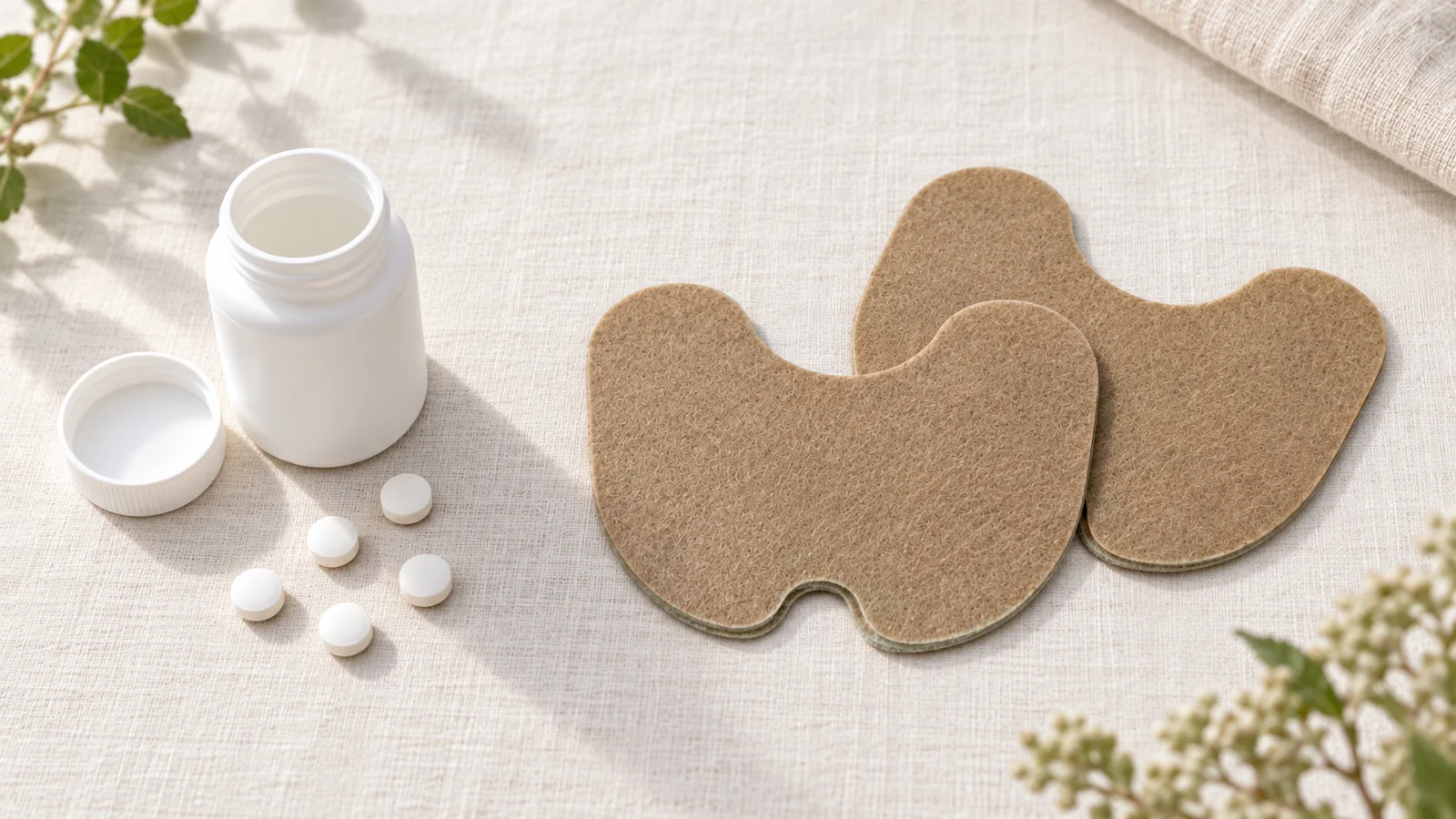
When joint pain strikes, most people reach for a bottle of ibuprofen or acetaminophen. It's familiar, fast, and available at every pharmacy. Topical products — creams, gels and patches, including herbal patches — are another option many people try for minor aches in one spot.
They work differently, and each has its own trade-offs. Here's how they compare.
How They Work: Two Different Approaches
Oral Painkillers (Systemic)
When you swallow a painkiller, it travels through your digestive system, enters your bloodstream, and circulates through your entire body. That's why one tablet can ease pain in several places at once — and also why side effects can show up in the stomach, liver or kidneys.
Common types:
- NSAIDs (ibuprofen, naproxen) — Reduce inflammation and pain
- Acetaminophen (Tylenol) — Blocks pain signals but doesn't reduce inflammation
- Prescription opioids — Block pain receptors in the brain (high addiction risk)
Topical Patches (Local)
A patch is applied where it hurts and holds its ingredients against the skin for several hours. What happens next depends on the type of patch. Some ingredients stay mostly in the skin, while others — such as methyl salicylate, capsaicin or diclofenac — can be partly absorbed into the body.
Types include:
- Herbal patches — Use plant ingredients (such as mugwort, camphor, menthol or capsaicin) that create a warming or cooling sensation
- Lidocaine patches — Numb the area with a local anesthetic
- NSAID patches — Deliver diclofenac or similar drugs topically
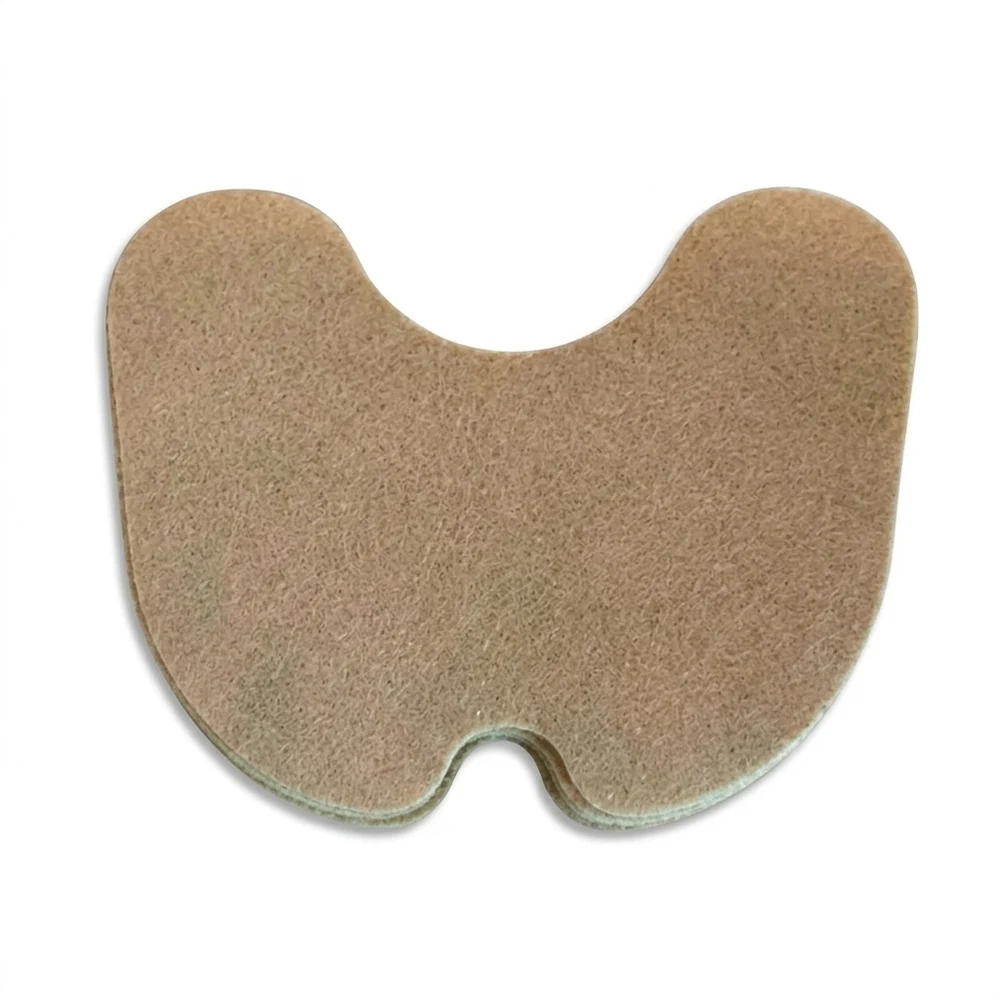 Mentioned in this articleMrjoint Herbal Knee Relief Patches KitFrom $34.99View Details →
Head-to-Head Comparison
| Factor | Oral Painkillers | Herbal Patches |
|---|---|---|
| How it acts | Through the whole body | Applied locally; warming or cooling sensation |
| Onset | Often 30–60 minutes | A warming or cooling sensation is often felt within 20–60 minutes |
| Duration | 4–8 hours per dose | Worn 8–12 hours per patch (follow the label) |
| Common side effects | Stomach upset; ulcers and bleeding with long-term NSAID use | Skin redness, itching or rash; some ingredients can be absorbed |
| Liver/kidney risk | Yes, especially with long-term or high-dose use | Less studied; not risk-free |
| Addiction potential | Yes (opioids); No (NSAIDs) | No |
| Drug interactions | Many (e.g. blood thinners, blood pressure medication) | Possible — ask a pharmacist if you take other medicines |
| Evidence | Approved medicines with established doses | Little research on finished herbal patches |
| Convenience | Pop a pill | Apply and wear for several hours |
The Case for Patches
1. No Pill to Swallow
Long-term NSAID use is associated with a well-documented increase in gastrointestinal problems, including stomach ulcers, bleeding, and perforations — a risk that climbs with higher doses and longer use.
A patch doesn't pass through the stomach, which is one reason some people prefer a topical option for a minor ache in one spot. That doesn't make it side-effect-free: skin irritation is common, and some ingredients can still be absorbed through the skin.
2. Applied Where It Hurts
A patch sits right on the sore area, so you don't need to take something that goes through your whole body for an ache in one knee or one part of your back. The flip side is that a patch only covers a small area and does nothing for pain elsewhere.
3. Longer Duration Per Application
Most oral painkillers require re-dosing every 4–6 hours. Many patches are worn for 8–12 hours, and some people like to put one on in the evening instead of taking another pill. Follow the wear time on the label.
4. What the Evidence Does and Doesn't Show
Some ingredients used in patches — capsaicin, menthol, camphor and methyl salicylate — are also used in over-the-counter topical pain relievers. Finished herbal patches, however, have little clinical research behind them, so don't expect the same predictability as an approved medicine. Results vary from person to person.
5. Fewer Pills — But Still Check Interactions
Oral NSAIDs interact with blood thinners, blood pressure medications, corticosteroids, and many other drugs. If you take prescription medication, ask your doctor or pharmacist before using any patch.
When Oral Painkillers Are Still the Better Choice
Patches aren't the answer for everything. Oral medications may be more appropriate when:
- Pain is widespread — Patches cover a small area. If you have pain in multiple locations simultaneously, systemic relief may be more practical.
- Pain is severe and acute — After a major injury or surgery, prescription-strength systemic pain relief may be necessary in the short term.
- You need anti-fever effects — NSAIDs and acetaminophen reduce fever; patches do not.
- The pain source is internal — Patches can't reach headaches, menstrual cramps, or dental pain effectively.
The Best of Both Worlds

Some people use both, at different times — for example a patch for a minor ache in one spot and an occasional OTC painkiller when they need it. Before you combine them:
- Check the ingredients — A patch with methyl salicylate plus an oral NSAID or aspirin means more salicylate-type medicine overall
- Ask a pharmacist — Especially if you take prescription medication
- Stick to the label — Don't exceed the wear time of the patch or the dose of the tablet
Making the Switch: What to Expect
If you're thinking about trying patches alongside or instead of oral painkillers:
- Don't change prescribed medication on your own — Talk to your doctor or pharmacist before reducing or stopping any painkiller you've been prescribed
- Set realistic expectations — A herbal patch gives a warming or cooling sensation and may take the edge off minor aches; results vary
- Track your pain levels — Keep a simple daily journal so you and your doctor can see what's working
- Watch your skin — Stop using the patch if redness, itching or a rash develops
Our Recommendation
For minor muscle and joint aches in one spot, a patch is a reasonable thing to try, and some people find it more convenient than taking tablets. It is not a replacement for medical advice or prescribed treatment. If you'd like to try ours, the Mrjoint Back Pain Patches, Knee Relief Patches and Neck & Shoulder Patches are herbal patches for temporary relief of minor aches and pains of muscles and joints.
For severe, persistent or worsening pain, see a doctor rather than relying on patches or over-the-counter tablets.
Related Articles
- The Best Back Pain Patches: A Natural, Pill-Free Buying Guide – Compare top patch options in detail.
- 7 Natural Ways to Relieve Lower Back Pain at Home – Combine patches with other natural remedies.
- Sciatica Pain Relief: Causes, Symptoms & Natural Treatments – Causes, symptoms and when to see a doctor.


